One Year of Chief Minister Rural Bus Scheme: Regular Bus Service Reaches 850 Villages for the First Time: Chief Minister Shri Vishnu Deo Sai
The Chief Minister Rural Bus Scheme, launched to connect remote forest regions and difficult rural areas of Chhattisgarh with safe, accessible, and regular passenger transport, has completed one year of operation.
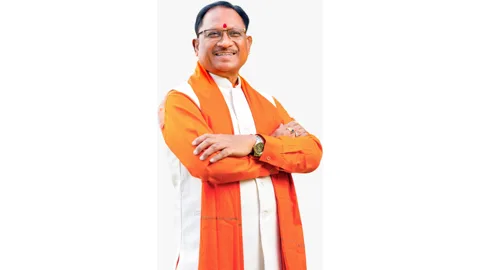
The Chief Minister Rural Bus Scheme, launched to connect remote forest regions and difficult rural areas of Chhattisgarh with safe, accessible, and regular passenger transport, has completed one year of operation. Launched from Jagdalpur on October 04, 2025, the scheme currently operates 107 buses across 106 selected routes in 13 districts of Bastar and Sarguja divisions. These buses have provided regular passenger bus service to 850 villages where this facility was previously unavailable. In one year, the buses under the Chief Minister Rural Bus Scheme have covered a distance of approximately 2.4 million kilometers. Currently, these buses are running about 17,500 kilometers daily. The total length of the notified routes under the scheme is around 5,300 kilometers. The length of these routes ranges from 14 kilometers to 105 kilometers, and two trips are operated daily on most of the routes. Chief Minister Shri Vishnu Deo Sai, on the completion of one year of the scheme, said that citizens living in remote villages should also get equal opportunities for easy access to education, health, employment, markets, and administrative services. The Chief Minister Rural Bus Scheme is bringing this vision to the ground. He stated that in areas where regular passenger buses never reached, villagers are now reaching schools, hospitals, haat-bazaars, block, and district headquarters safely on time via buses. This is not merely an expansion of transport facilities, but a medium to connect remote regions to the mainstream of development. Started with 34 buses, the number increased to 107 in one year. The Chief Minister Rural Bus Scheme was launched on October 04, 2025, in Jagdalpur by Union Minister of Home Affairs and Cooperation Shri Amit Shah in the presence of Chief Minister Shri Vishnu Deo Sai. Initially, bus service was started on 34 routes connecting about 250 villages. Its scope has expanded rapidly within a year. Now, 107 buses are operating on 106 routes, and the number of villages connected to regular bus service for the first time has increased to 850. In the first phase of the scheme, Bastar and Sarguja divisions have been included. 50 buses are operating on 51 routes in Bastar division, and 57 buses are operating on 55 routes in Sarguja division. In Bastar division, 9 buses are running on 8 routes in Sukma district, 7 buses on 7 routes in Dantewada, 11 buses on 11 routes in Bijapur, 4 buses on 4 routes in Narayanpur, 5 buses on 5 routes in Bastar, 12 buses on 12 routes in Kanker, and 9 buses on 8 routes in Kondagaon. Similarly, in Sarguja division, 8 buses are operating on 8 routes in Sarguja district, 9 buses on 10 routes in Surajpur, 7 buses on 7 routes in Balrampur, 16 buses on 16 routes in Jashpur, 6 buses on 6 routes in Koriya, and 4 buses on 4 routes in Manendragarh-Chirmiri-Bharatpur. Where pickup was once the support, buses now arrive on time. The real transport needs of remote rural and tribal areas formed an important basis behind launching the scheme. Due to the lack of regular bus service in many villages of Bastar and Sarguja, villagers had to travel in pickup trucks and other cargo vehicles. Passengers often had to travel long distances sitting in open spaces or standing. This journey was particularly difficult for women, children, the elderly, and patients. Due to the low number of passengers on difficult routes, it was not commercially viable for private bus operators to run regular buses. The Chief Minister Rural Bus Scheme developed a model of regular passenger transport with financial assistance from the state government to bridge this gap. Travel on the Konta-Jagargunda route is now easier. The impact of the scheme is particularly visible in remote areas like Sukma. Earlier, villagers had to rely on limited means of transport on the approximately 83-kilometer route from Konta to Jagargunda. After the launch of the Chief Minister Rural Bus Scheme on this route, travel has become more convenient for the villagers. A field assessment conducted on this route in June 2026 revealed that women are traveling safely on the bus with small children and luggage. School students are reaching school regularly, and patients have got convenience in commuting to and from health centers. Using this same route, villagers carry mangoes, mahua, chickens, and other minor forest produce to haat-bazaars and return to their villages the same day. The bus service has also proven useful for laborers and youth going outside for work. Markets are reaching villages along with passenger buses. The impact of the Chief Minister Rural Bus Scheme is not limited to passenger travel. The buses are also playing the role of a small distribution network between remote villages and local markets. While villagers are transporting their products and forest produce to haat-bazaars, essential materials from the market are reaching the villages. Increased regular contact has also supported economic activities between villages, haat-bazaars, development blocks, and district headquarters. Security force camps are also located on many routes, and personnel posted there are getting commuting facilities. Thus, the benefit of the scheme is expanding from transport to education, health, livelihood, trade, and the local economy. The government is providing financial assistance for bus operations on low-passenger routes. To make regular bus operations viable on difficult and low-passenger routes, the state government is providing financial assistance per kilometer to bus operators. There is a provision for assistance of 26 rupees per kilometer in the first year, 24 rupees in the second year, and 22 rupees per kilometer in the third year. This financial assistance is provided for a maximum of up to three years. Vehicles operated under the scheme are also provided exemption from monthly motor vehicle tax for a maximum of up to three years. So far, a total of 5.77 crore rupees in financial assistance has been given to 107 bus operators. The feature of this model is that the state government does not need to purchase buses itself or build new bus depots. The ownership and operation of the bus remain with the private operator, and the passenger fare is also received by the operator. The state government provides prescribed financial assistance to make operations viable on routes where running a regular bus service would be difficult under normal circumstances. GPS monitoring of every bus, payment based on kilometers run. Extensive use of technology is being made to ensure transparency and regularity in the scheme. A Vehicle Location Tracking Device (VLTD) has been installed in every bus. Through this, buses are monitored in the Transport Department's Control and Command Center. Live tracking of buses along with information on trips, routes, and stoppages is available on the MMGBY portal. Financial assistance to operators is also paid online based on actual kilometers run on the notified route according to the VLTD report. Regional Transport Officers approve or reject daily reports after checking them. For the convenience of passengers, the timetable of the buses is also being made available on the Bus Sangwari app. The scheme will reach eight more districts in the second phase. Following the successful operation of the Chief Minister Rural Bus Scheme, preparations are now underway for its expansion in the second phase. In the second phase, it has been decided to start bus services in 85 tribal development blocks of scheduled areas across eight new districts. These include Mohla-Manpur-Ambagarh Chowki, Khairagarh-Chhuikhadan-Gandei, Balod, Gariaband, Gaurela-Pendra-Marwahi, Raigarh, Korba, and Dhamtari districts. Preparations are underway to bring 4,368 villages currently deprived of bus facilities in these areas under the scope of the scheme. This is expected to benefit about 14.57 million people with transport facilities. The operation of 60 to 80 buses is proposed in the second phase. To further improve passenger convenience, the facility to pay bus fares through UPI and QR codes is also proposed. Fare concessions for special categories. Special attention has been given to social sensitivity in the scheme. There is a provision for 100 percent fare exemption including an assistant for the visually impaired, intellectually disabled, persons unable to walk on both legs, senior citizens aged 80 years or above, and persons suffering from HIV or AIDS. Naxal-affected persons certified by the collector are given a 50 percent concession in fare. Chief Minister Sai stated that the state government's goal is not to limit transport facilities only to cities and major routes, but to reach the villages situated at the farthest ends. In the future, the Chief Minister Rural Bus Scheme will be expanded to connect more and more bus-less villages with regular passenger transport, so that distance does not become a barrier for any citizen in reaching education, health, employment, and development opportunities.
त्रुटि दिखी? हमारी सुधार नीति और संपादकीय नीति देखें।