Chief Minister Shri Vishnu Deo Sai has a cordial interaction with Japanese students: Introduced them to Chhattisgarh's historical and cultural heritage
A 17-member student delegation from Ehime University, Japan, paid a courtesy visit to Chief Minister Shri Vishnu Deo Sai at his official residence office in the capital Raipur.
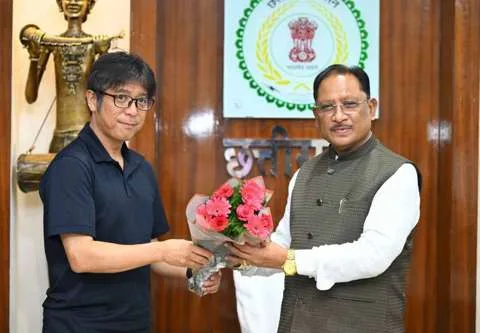
A 17-member student delegation from Ehime University, Japan, paid a courtesy visit to Chief Minister Shri Vishnu Deo Sai at his official residence office in the capital Raipur. Chief Minister Shri Sai had a cordial interaction with the students who arrived in Chhattisgarh on a three-day academic tour under the India-Japan Inter-Exchange Program. During this, various subjects including historical and cultural relations between India and Japan, Buddhist heritage, education, research, technical innovation, startups, and the growing dialogue between the youth of both countries were discussed. Welcoming the Japanese students warmly on the soil of Chhattisgarh, Chief Minister Shri Vishnu Deo Sai said that the roots of friendship between India and Japan are deeply connected with the ancient cultural and spiritual heritage of both countries. Over time, this relationship has extended beyond culture and spirituality to many areas of education, science, technology, innovation, and economic cooperation. The Chief Minister said that today India and Japan are playing an important role in the world's development with a beautiful coordination of tradition and modernity. There is a strong foundation of mutual trust and respect between the two countries. Through such academic and cultural exchanges between youth and students, this relationship will become even stronger in future generations. Chief Minister Shri Sai said that India is the land of Lord Buddha. Lord Buddha's message of peace, compassion, friendship, and human welfare has influenced many countries of the world, and a deep imprint of Buddhist philosophy is also visible in Japanese culture. This shared spiritual heritage connects India and Japan in a unique cultural thread. Informing the Japanese students about the rich archaeological heritage of Chhattisgarh, he mentioned important sites like Sirpur, Mainpat, and Bhongapal. Chief Minister Shri Sai said that Sirpur, situated on the banks of Mahanadi, is a wonderful center of Chhattisgarh's ancient civilization, art, architecture, and Buddhist heritage. The archaeological remains found here tell the story of the glorious history and coordination of different cultures of the state. Chief Minister Shri Sai said that the state government is continuously striving to give the historical, archaeological, and cultural heritage of Chhattisgarh a new identity in the country and the world. Planned efforts are also being made in the direction of developing Sirpur as a world-class historical and tourist destination. Our effort is that students, researchers, and tourists coming from various countries of the world should visit Chhattisgarh, know the heritage here, and establish a permanent relationship of knowledge and culture with the state. Chief Minister shared experiences of Japan visit Chief Minister Shri Vishnu Deo Sai also shared experiences related to his Japan visit with the students. He praised Japan's disciplined work culture, technological progress, and respect for its traditions. The Chief Minister said that the way Japan has preserved its cultural identity while making remarkable progress in modern science and technology is inspiring. He said that India, taking along its thousands of years old civilization and cultural values, is also moving forward rapidly in the direction of modern technology, innovation, and knowledge-based economy. In such a situation, the growing dialogue between the youth of India and Japan is extremely important for the future relations of both countries. New possibilities of cooperation will open up through education and technology Chief Minister Shri Sai said that the world is changing rapidly today, and knowledge, research, innovation, and technology have become the most important bases of development. Increasing cooperation between the educational institutions of India and Japan can provide opportunities for students to connect with new technologies, research, and innovation. He expressed confidence that dialogue between the students of Ehime University and the higher educational and technical institutions of Chhattisgarh can develop new opportunities for joint research, technical cooperation, startups, and innovation in the future. Such programs not only build institutional relations between two countries but also prepare a strong basis of friendship and mutual understanding among the youth. Japanese students impressed by Indian culture and warmth of Chhattisgarh Members of the Japanese student delegation also shared their experiences of staying in Chhattisgarh with the Chief Minister. The students told that they had a very warm experience in Raipur. The culture, traditions, and simple and cordial behavior of the people here impressed them specially. The students also praised Indian food. They told that during their stay in Chhattisgarh, they got an opportunity to closely know the traditions of Ganeshotsav and its cultural significance. The Japanese girl students enthusiastically told that they applied mehendi and also shopped for Indian attire. The students said that this journey gave them an opportunity to understand India beyond books and classrooms through the society, culture, and lifestyle here. Chief Minister Shri Sai expressed happiness after hearing the experiences of the students and said that Chhattisgarh is known for its simplicity, warmth, and tradition of hospitality. He told the students to take away pleasant memories of Chhattisgarh from here and visit the state again in the future. Showed special interest in startups and technical innovations of NIT Raipur During their stay in Chhattisgarh, the Japanese student delegation also visited various research centers and the incubation center of NIT Raipur. The students took information about the startup activities operated there, research projects, and new technologies being developed. Especially those startups attracted the attention of Japanese students which are developing practical solutions to the daily problems of common people through technology. Appreciating these innovations, the delegation showed interest in the possibilities of technology transfer, research, and innovation-based cooperation. It is noteworthy that under the India-Japan Inter-Exchange Program, a 17-member student delegation of Ehime University has come to Chhattisgarh on a three-day academic tour. During their stay, the delegation visited various research centers of NIT Raipur and participated in academic and cultural activities. The tour program of the delegation also includes understanding the historical and archaeological heritage of Chhattisgarh. In this sequence, the student delegation will visit the historical and archaeological site Sirpur. Here students will closely know the ancient Buddhist heritage, architecture, art, and cultural history of Chhattisgarh. Wishing all the members of the delegation best wishes for their Chhattisgarh stay, Chief Minister Shri Sai said that such journeys introduce the new generation of two countries to each other's culture, achievements, and possibilities. He expressed confidence that this dialogue between the youth of India and Japan will write new chapters of friendship, knowledge, innovation, and shared progress in the future. On this occasion, Chief Minister's Secretary Shri P. Dayanand, NIT Raipur Professor Shri Dilip Singh Sisodia, Dr. Sameer Bajpai, IIT Hyderabad Professor C.K. Mohan, Industries Department Additional Director Shri Sanjay Gajghate, Deputy Director Shri Amay Tripathi, CHIPS Joint CEO Anupam Ashish Topo and other officers were present.
त्रुटि दिखी? हमारी सुधार नीति और संपादकीय नीति देखें।